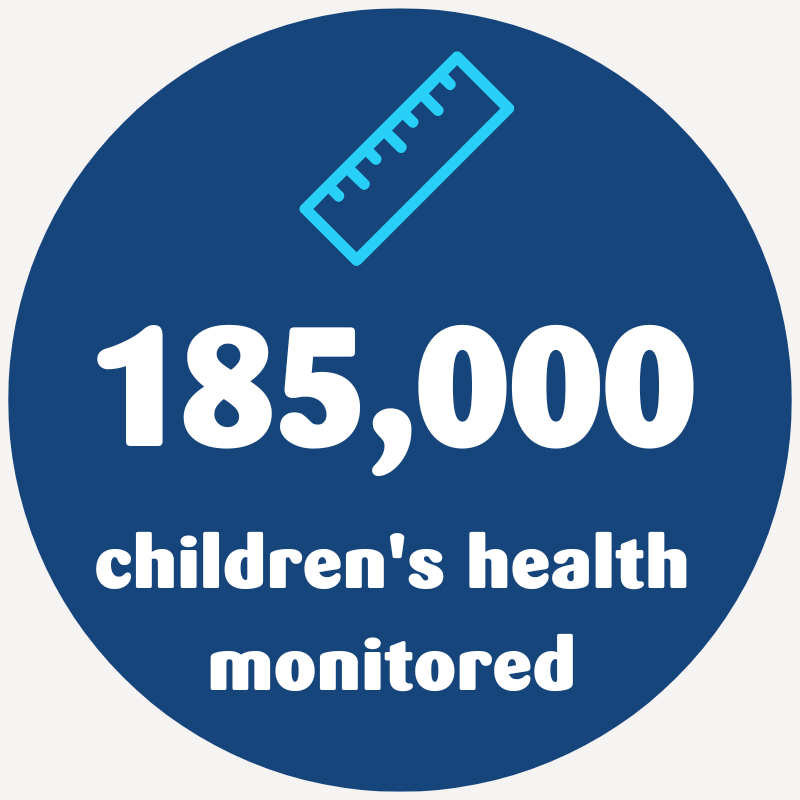
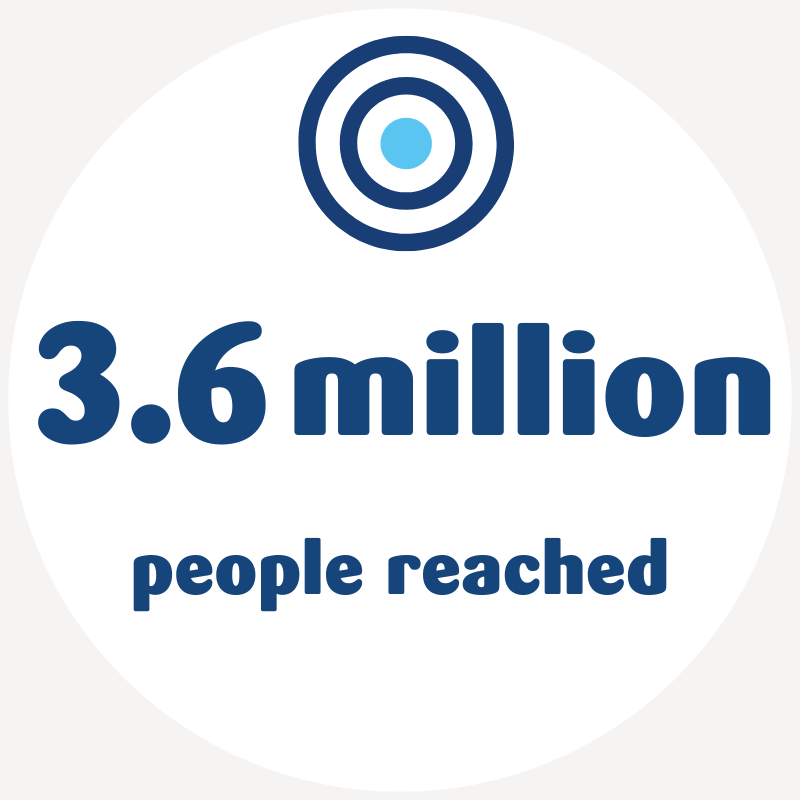
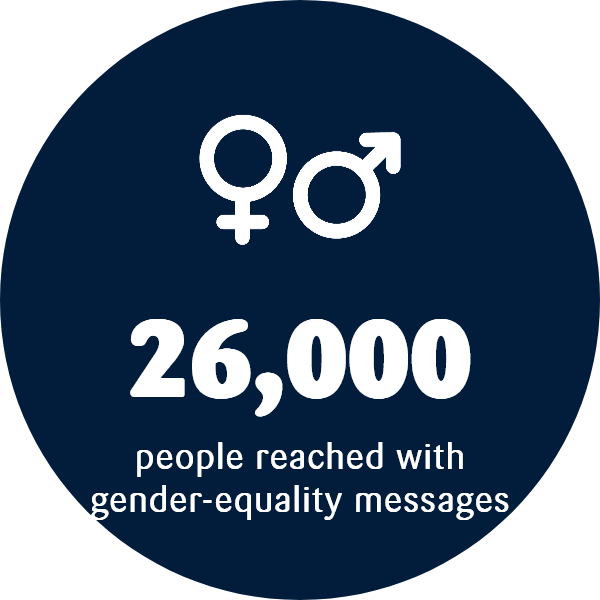
Our impact in numbers

How do we create the biggest impact? Max Foundation started with that question, which led us to where we are today. From water pumps to Healthy Villages, from a volunteer to a professional organisation, from Bangladesh to Nepal and Ethiopia. This worked: in our programme areas in Bangladesh, we achieved a 50% reduction in stunting!


Max news

Show all
Scientific Study: Max Foundation

Halves Child Undernutrition

The renowned international Karolinska Institutet validates Max Foundation's programme success on improving child undernutrition in Bangladesh. The featured study, published in the journal Children, showcases significant impact, halving undernutrition in children in just four years, which is much faster than the national trend.

Read the full report
Max Foundation results

Impact longread

Click on the image below to go straight to our impact longread! In it, we explain how the Healthy Village approach made a 50% decrease in stunting possible in our programme areas, as well as why this is so cost-effective, and more.

Read the full report
Max Foundation innovations

as local government 'Best Practices'

Local government in Bangladesh has chosen to feature 10 of Max Foundation's innovations in their "Best Practice compendium".

Read the full report

Community voices

Show all

Creating a Market for Child Nutrition through Entrepreneurship

The story of shop owner, Muluwork Tesfaw Read article

Muluwork Tesfaw runs a small shop in Mergech kebele, East Gojam, Ethiopia. When health extension workers—government employees who provide primary health education and services at village level—approached her about selling complementary food for infants, she saw an opportunity. This isn’t just about one entrepreneur. It’s about building the market systems that make nutrition services sustainable and accessible long-term.

Selam Tesfaw, 40, now walks to Muluwork’s shop to buy complementary food for her youngest daughter, Hanna. “Instead of preparing it myself, I’d rather buy it from the shop because it saves me time and energy,” she said.

Health extension workers teach mothers how to prepare complementary food for infants and young children. Some mothers implement what they learned, but most do not buy all the ingredients and prepare it themselves. This is the gap that programmes often miss: knowledge doesn’t automatically translate into practice when the enabling market infrastructure doesn’t exist.

Muluwork saw this gap as a business opportunity. She started with 15 kilos of complementary food and sold it all in a couple of months. She did not make the profit she expected because the community does not yet have full awareness of complementary food. “I don’t want to worry about the profit now, because I know I am selling something beneficial to the community,” she said. “The more people get accustomed to it, I know I will be able to make a profit then. And I will increase my production to 50-100 kilos.”


Muluwork did not have awareness of nutrition before health extension workers approached her. “Having this nutritious meal helps children to be healthy and it prevents stunting. I want to learn more about raising healthy children,” she said. “In my community, I wish to see children being fed proper nutrition so that they can grow physically and mentally healthy.”

Selling the complementary food has created an additional source of income. Beyond her shop, she also has livestock (one ox, three sheep, one donkey) and two chickens whose eggs she sells at the shop.

Muluwork is not focused on immediate profits. She understands that building demand for nutrition products takes time. As awareness increases, she expects sales to grow. “When individuals’ lives are changed, the country as a whole can change,” she said. “If healthy children are raised, they will have a better future.”

Max Foundation’s Healthy Village approach in Ethiopia, implemented in partnership with Plan International in Tigray region, and with iDE in East Gojam, s strengthens child health outcomes by combining nutrition, WASH, and maternal health interventions with systems strengthening,including through local entrepreneurship—so that sustainable delivery infrastructure remains embedded in community economies.

Photo: Genaye Eshetu

Households in Rural Bangladesh Invest in Sanitation

Read article

When Max Social Enterprise installed a piped water grid in Krishnakathi village, Bangladesh, Khadiza Begum, 45, was among the first to connect. Her family invested BDT 20,000 (~€141) in a water connection, basin, and bathing chamber. Five neighbours followed. Within 16 months, 62 households across the village had collectively invested BDT 660,000 (~€4,664) in upgraded WASH facilities.

That scale of household investment did not happen by chance. Before the Building Water Business (BWB) programme arrived, Krishnakathi had almost no sanitation infrastructure: only 11 of its 164 households had any toilet facility, and none had basins or bathrooms. Groundwater sits as deep as 800 feet, making private boreholes unaffordable for most families. Seasonal flooding regularly contaminated ponds and tube wells with iron, arsenic, and salinity. Women carried the primary responsibility for water collection — a daily task that was time-consuming and brought significant health risks. 

In January 2023, Dhaka Ahsania Mission, a partner in the BWB programme, facilitated courtyard sessions with the Dakshin Krishnakathi Community Support Group (CSG), of which Khadiza was a member. Using the RAINBOWS community engagement approach, facilitators led discussions on water scarcity and health risks, and the community voted collectively to adopt a piped water system. CSG members mapped the area and set shared standards for water use and hygiene. 

Max Social Enterprise then installed the Max TapWater grid with a one-time connection fee of BDT 5,000 (~€35) and a monthly tariff of BDT 200-300 (~€1).

The investment decisions that followed were made household by household. Across Krishnakathi, 25 families upgraded pit latrines to offset latrines, 33 built new latrines, 47 installed basins, and 4 built new bathrooms — all within 16 months of the grid going in. Data from across Bharpasha Union’s 27 Community Support Groups shows what grid access makes possible: 88% of households in the 8 grid-connected CSGs met the programme’s Rank-1 standard for safe water access, compared to 5% in the 19 non-grid CSGs. 

Md. Ashrafuzzaman Khan, Union Parishad Chairman of Bharpasha Union, has supported the grid’s expansion directly — collecting fees, arranging trade licences for local entrepreneurs, and coordinating with Dhaka Ahsania Mission. The Max TapWater grid operates under Max Social Enterprise’s tariff-funded maintenance model. The latrines, basins, and bathrooms that households built remain. Khadiza’s household, and the 61 others that connected, made those investments with their own resources — based on infrastructure they could see working around them. 

School Supervisor Works to Improve WASH and Menstrual Health

Read article

Andualem Anteneh, 38, grew up in Enebre Kebele, Enebsae Woreda, East Gojam, Ethiopia — a village without clean water or toilets. He completed a bachelor’s degree in Educational Planning at Debre Markos University, is currently studying for a master’s degree by distance, and has spent the past eight months living at the compound of Enebre Primary School, where he works as a supervisor. His wife and two young children live in the nearest town; he visits at weekends. Enebre Primary School has 407 students. 

Water and sanitation at the school are severely constrained. There is one hand-dug well, restricted to teachers and staff. Students are told to drink water at home. Of the eight toilets — four for girls, four for boys — only three of the boys’ toilets are functional, and students cannot use them because there is not enough water to maintain them. If students need a toilet during the school day, they go home or to the fields. “One hand-dug well is not enough for all the students, so we tell the students to drink water at their homes. We can’t also let the students use the few functional toilets because we don’t have enough water,” Andualem said. 

Andualem was part of a small group — two other teachers, a club representative, and the school director — who received hygiene and sanitation training from ORDA, the Organisation for Rehabilitation and Development in Amhara, a Max Foundation partner. He passed what he learned to 24 students and is re-establishing the school’s gender club, which had been inactive.

“The training made me aware that our girl students face a lot of challenges during their menstrual cycle. Early marriage is also common practice in our community. The school administration has now drafted a new plan to create awareness on early marriage, hygiene, and sanitation to bring about sustainable change through the gender club,” he said. 

He is also renovating a room to serve as a menstrual health management space where girls can rest or change sanitary pads during school hours. “I wish to see that girls stop missing class due to menstruation,” he said. 

Beyond the school, Andualem describes a community where diet is narrow — mostly injera with shiro stew — and where farmers tend to sell eggs and vegetables rather than eat them. The dry climate limits what can be grown, and poor harvests are common despite the cost of fertiliser. Handwashing before meals is practised, but rarely with soap. He includes himself in this: “Even if I have awareness of handwashing, I rarely wash my hands with soap. Even those who know don’t put it to practice.” He sees the connection between nutrition and behaviour as fundamental: “I wish people be aware of proper nutrition because healthy eating leads to a healthy mindset.”

Photo: Genaye Eshetu

The visit that saw what others missed

Fensy's Story Read article

When Healthy Village Urban facilitator Afrin weighed Rajin at a courtyard session in Sardertari village, Lalmonirhat district, Bangladesh, he was eleven months old and weighed just 5.2 kg. His mother Fensy Akhtar, 20, had noticed he was small and that feeding was difficult because of his cleft lip. She had not known the situation was critical.

“I thought he was just small,” Fensy recalls, “until the HVU team explained to me how serious it was.”

Fensy’s household depends on her husband’s earnings as a farm labourer and her father-in-law’s work as a van driver, bringing in approximately 14,500 taka (approximately €102) per month. Before the Healthy Village Urban (HVU) programme began working in her community, no one had reached the family with information about nutrition support or the possibility that Rajin’s cleft lip could be treated. In many communities in Lalmonirhat, congenital conditions like a cleft lip carry stigma and are often accepted as fate — the belief that treatment is impossible or unaffordable keeps families from seeking help even when they sense something is wrong.

Fensy began attending courtyard sessions in October 2023. These sessions brought caregivers together for practical learning on nutrition, hygiene, and child health, and used home visits and personal invitations to reach families who had not previously engaged with health services. When Afrin measured Rajin and found him in the red zone — severe acute malnutrition — she followed up at home and found his condition worsening. He had a fever and diarrhoea. She referred the family to a clinic the same day. Rajin then received specialised nutritional care at the hospital’s dedicated unit for children with acute malnutrition.

At home, the family built a hygienic latrine, cemented their tubewell platform, installed a motor pump for safe water, and set up a handwashing station. Fensy began washing hands before every feed and preparing nutritious meals for Rajin, including khichuri, a traditional Bangladeshi rice and lentil dish commonly recommended as complementary food for young children.

Rajin’s growth chart tells the story month by month. At eleven months: 5.2 kg, severe acute malnutrition. At fifteen months: 6.6 kg, moderate malnutrition. At twenty-one months: 7.8 kg, on a healthy growth curve. The progress came from surgical treatment, nutrition support, and improved hygiene practices working together — not any single intervention on its own.

The costs throughout were a real strain. Medical fees and WASH improvements stretched a tight household budget. And stigma had meant the family did not reach out earlier, even as Rajin’s condition worsened. These barriers — fatalism around congenital conditions, financial pressure, limited access to information — are not unusual in Lalmonirhat, and they are what the programme’s community outreach and dialogue work is designed to address.

Fensy now co-facilitates courtyard sessions in her community and encourages neighbouring mothers to set up handwashing stations at home. Rajin continues to be monitored through the programme’s growth tracking system.