Building on what works in Ethiopia’s villages
COWASH and Max Foundation have reviewed the first phase of their partnership to bring nutrition into Ethiopia’s community-managed water systems — building on what already works, rather than running parallel programmes, and generating evidence for national scale through the Seqota Declaration.
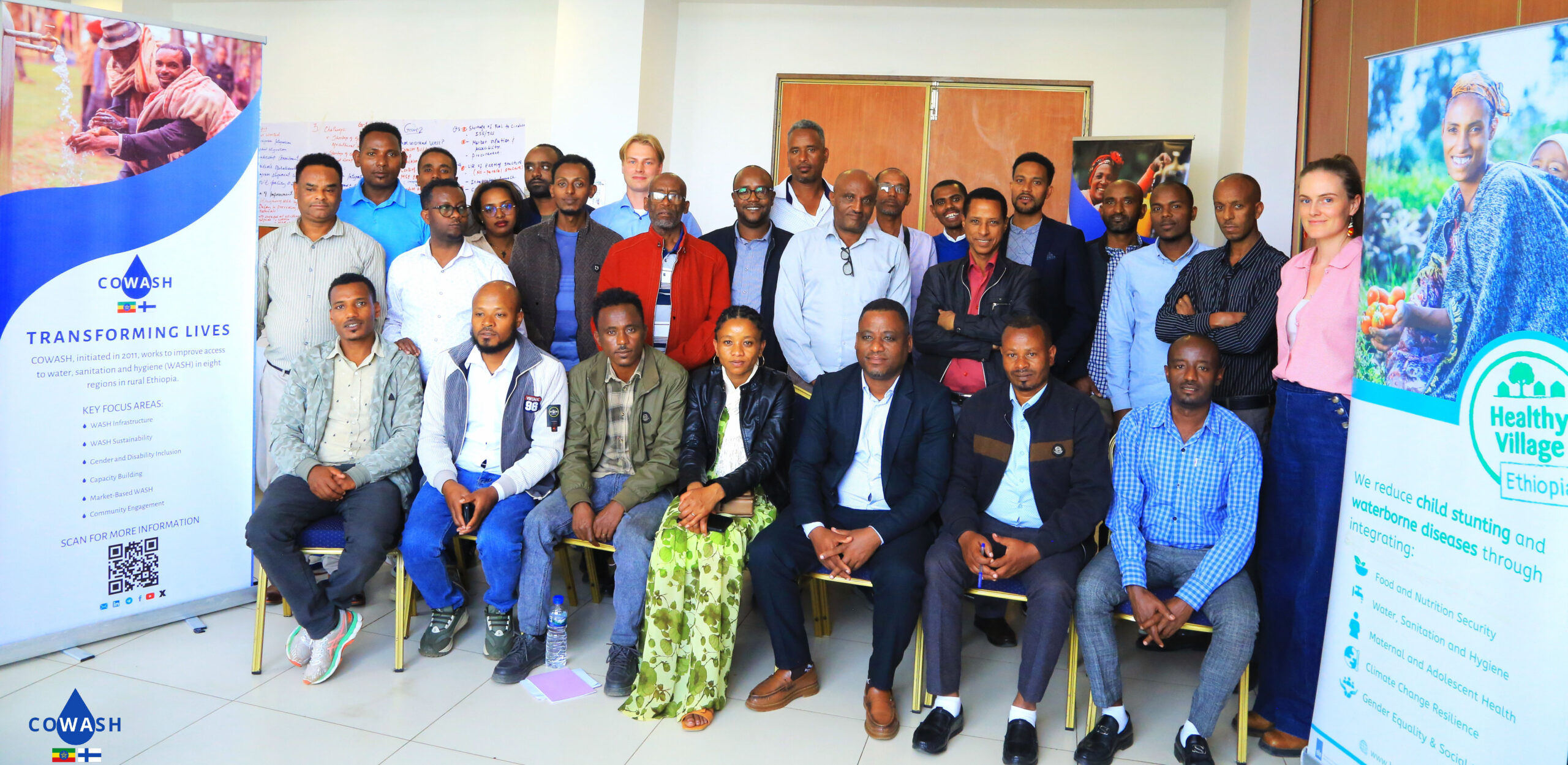
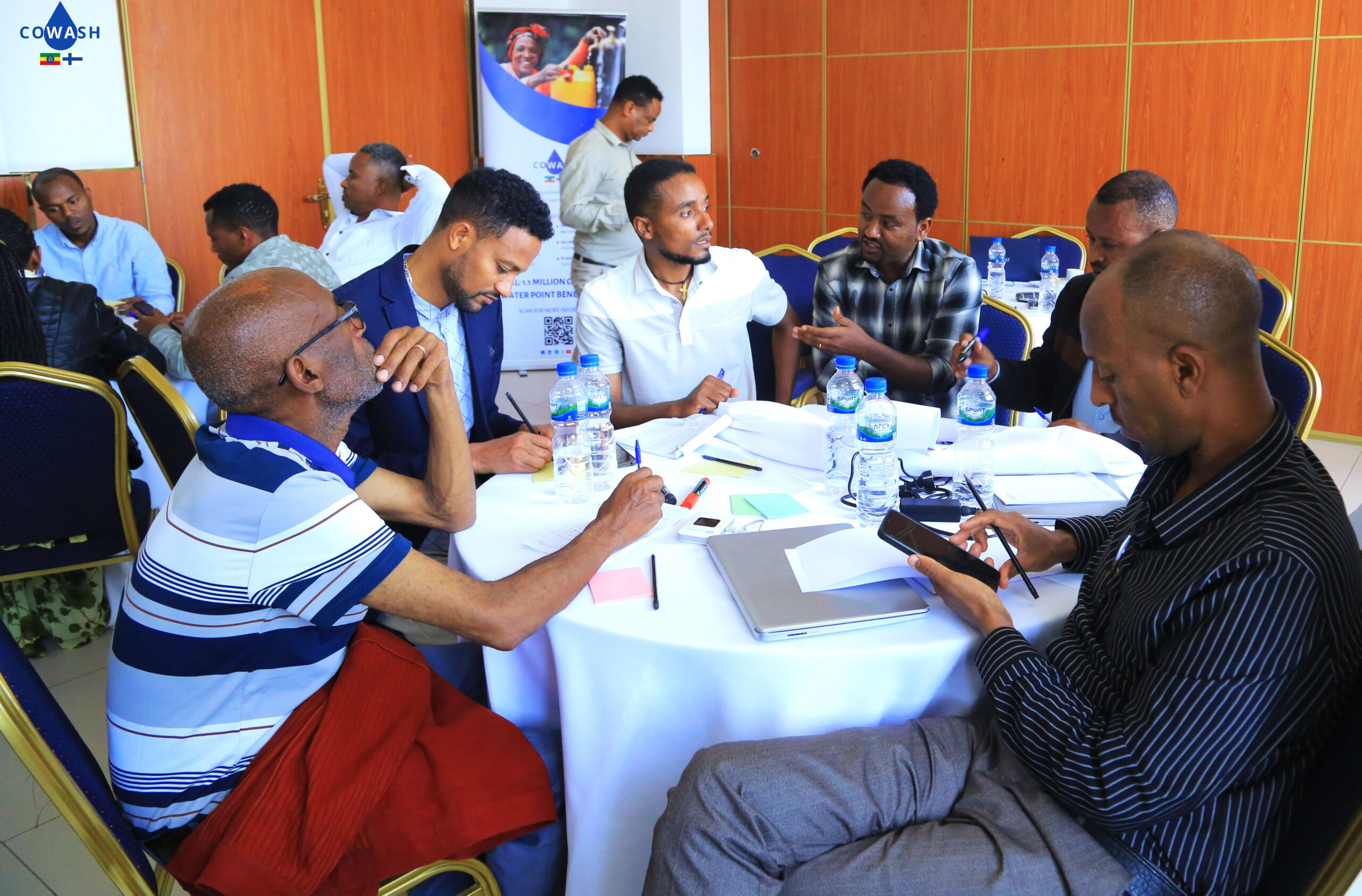
Last month, partners from COWASH and Max Foundation came together in the Central Ethiopia Region for the first joint review of a partnership that is quietly changing how water and nutrition services reach families. Around the table were federal officials from the Ministry of Health and the Seqota Declaration team, alongside local leadership from Fofa woreda (district) and the sector offices that run day-to-day services — agriculture, education, health, enterprise, water, and women and children’s affairs.
Moments like these are where integration is actually decided. A joint review is not a formality: it is where two organisations check that their combined work is holding together, where government partners keep it aligned with national systems, and where the people managing services locally shape what comes next. This review confirmed a clear shift — from two separate institutional tracks running side by side to a single, layered model that removes duplicated effort. Early data from the pilot points the same way: when communities manage combined water, nutrition and nutrition-sensitive agriculture together, the work becomes both more efficient and more likely to last.
About the partnership
COWASH IV and Max Foundation are testing how the Healthy Village approach to nutrition can be layered onto COWASH’s established, community-managed water systems — which already reach more than one million people across rural Ethiopia through community water points, Water and Sanitation Committees (WASHCOs) and local savings groups. Rather than building new structures, the partnership adds nutrition services, behaviour change and support for local entrepreneurs onto a platform that already works.
What the partners have built so far
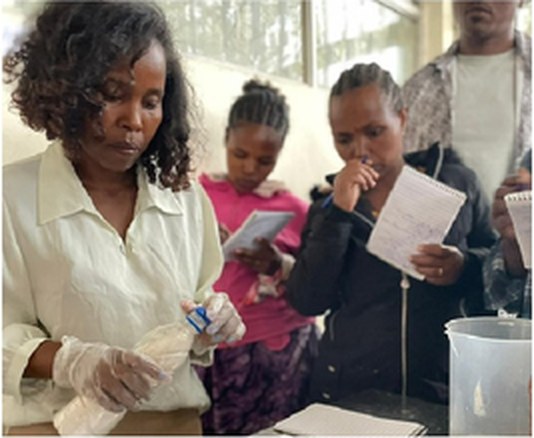
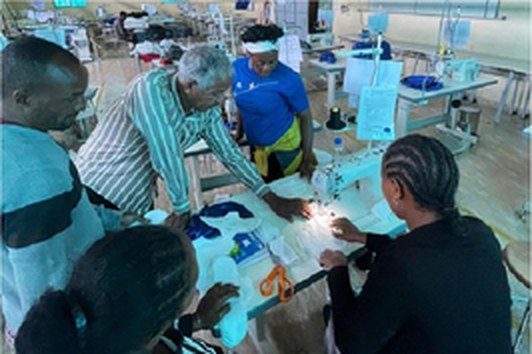
Since the work moved into villages at the start of the year, the joint teams have concentrated on skills and local supply. In January, a training-of-trainers brought together fifty people — government technical experts, agricultural and health extension workers, and local entrepreneurs — who then passed nutrition modules on to community health extension workers. In late April, a technical training with Wolkite Polytechnic College and its satellite institute helped members of the newly formed Selam Sanitation Enterprise learn to produce liquid soap and reusable sanitary pads. The aim is practical: a steady, affordable supply of sanitation products in Fofa woreda, made by a local business rather than shipped in.
In the villages now
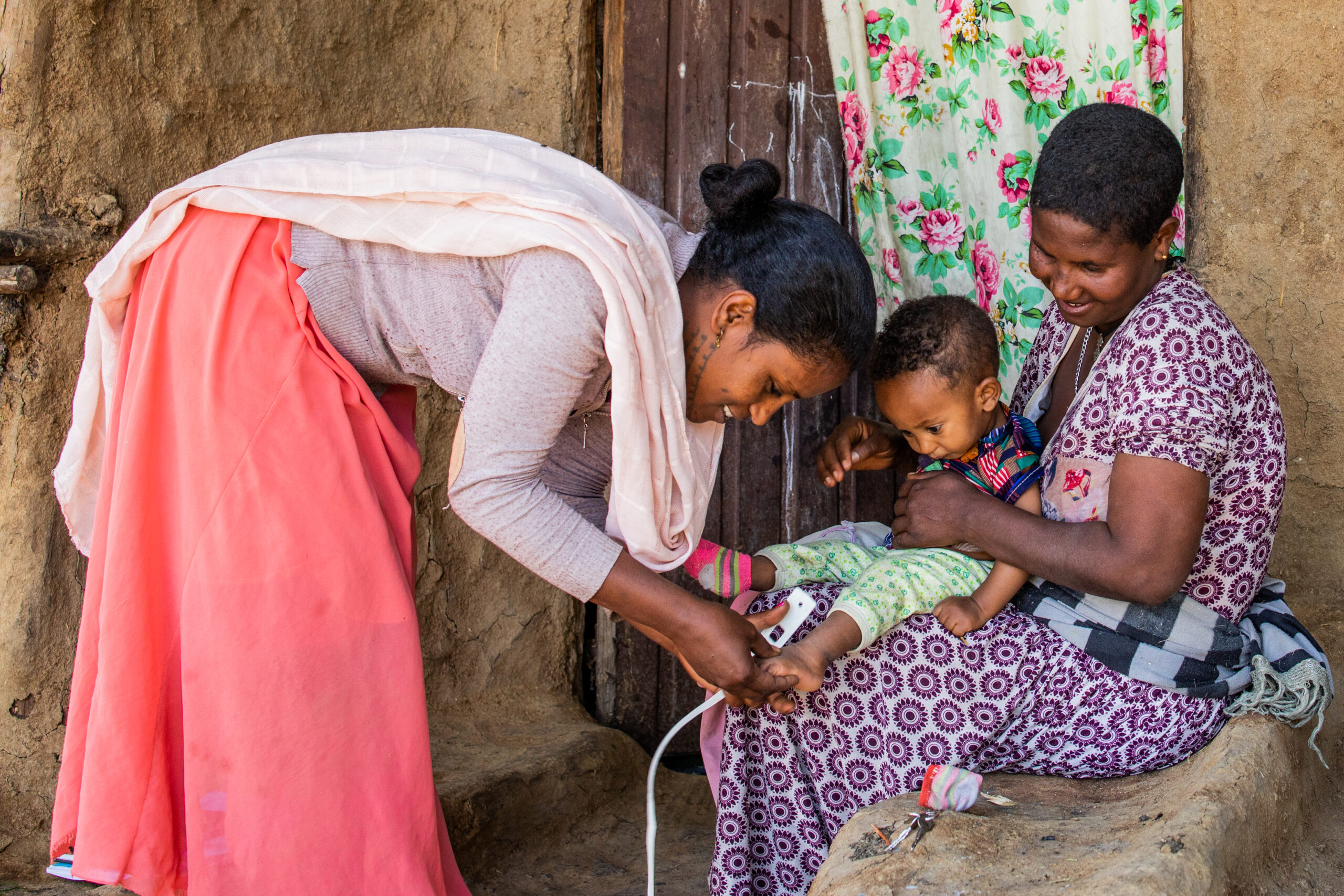
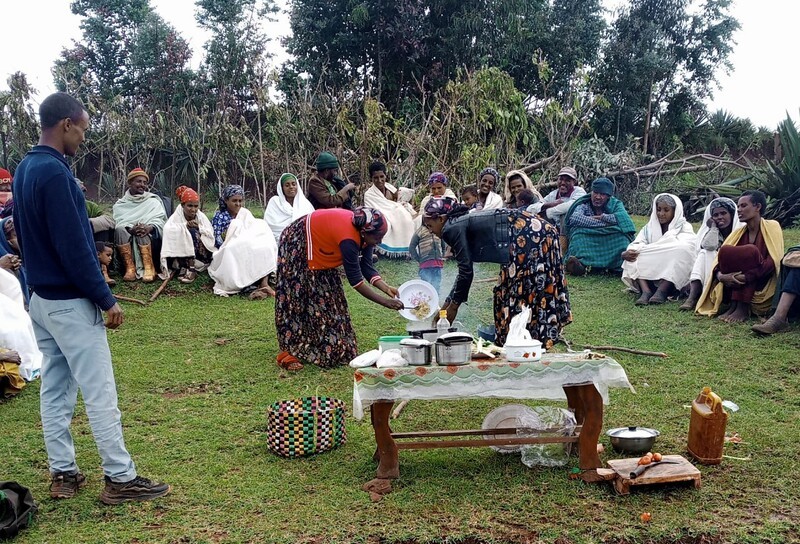
Across five health posts, health extension workers now monitor the growth of children under two, using equipment supplied through the partnership earlier this year. Mothers, and pregnant and lactating women, receive nutrition counselling on dietary diversity and feeding, paired with cooking demonstrations that show how to prepare varied meals and porridge from locally grown ingredients. At home, families are supported with poultry-keeping and homestead gardening to strengthen their own food security. Each of these runs through COWASH’s existing water platform and the government’s health system — not alongside them.
Why joining these services up matters
The reasoning is straightforward. A child who is repeatedly ill from unsafe water cannot absorb nutrients, however well they are fed; and better nutrition cannot hold if families lack clean water and sanitation. Delivered separately, water and nutrition progress stalls. Delivered through the same community structures, they reinforce each other. Ethiopia’s Seqota Declaration — the national commitment to end stunting in children under two — calls for exactly this kind of multi-sector approach, and the Ministry of Health’s Malnutrition-Free Village model already draws on lessons from Healthy Village.
What comes next
The partners are now finishing a nutrition business assessment, guided by the Seqota Declaration framework, to map where the private sector can sustain these services and where the gaps still are. Startup capital is being released to the Selam Sanitation Enterprise, and growth-monitoring and cooking-demonstration equipment is on its way to the remaining health posts in Fofa woreda. The intent throughout is the same: to leave behind systems — local businesses, trained health workers, government-run health posts — that keep working long after the partnership itself winds down.
This is not a standalone pilot. It is designed to generate evidence for two national pathways: the next phase of COWASH, and the Seqota Declaration’s scale-up through government systems. In other words, a practical test of a bigger idea — that lasting child health comes from integrated services embedded in systems a country already owns.