Looking at a public-private partnership: the Ambassador's visit to Barishal
On 13 August 2026, Dutch Ambassador to Bangladesh Joris van Bommel travelled to Bakerganj in Barishal to see how piped water reaches households through a market-based model. Around 100 water grids now operate across Barishal and Patuakhali — run as businesses, paid for by the households they serve, and built to keep running long after external funding steps back. The visit drew coverage across Bangladeshi national media.
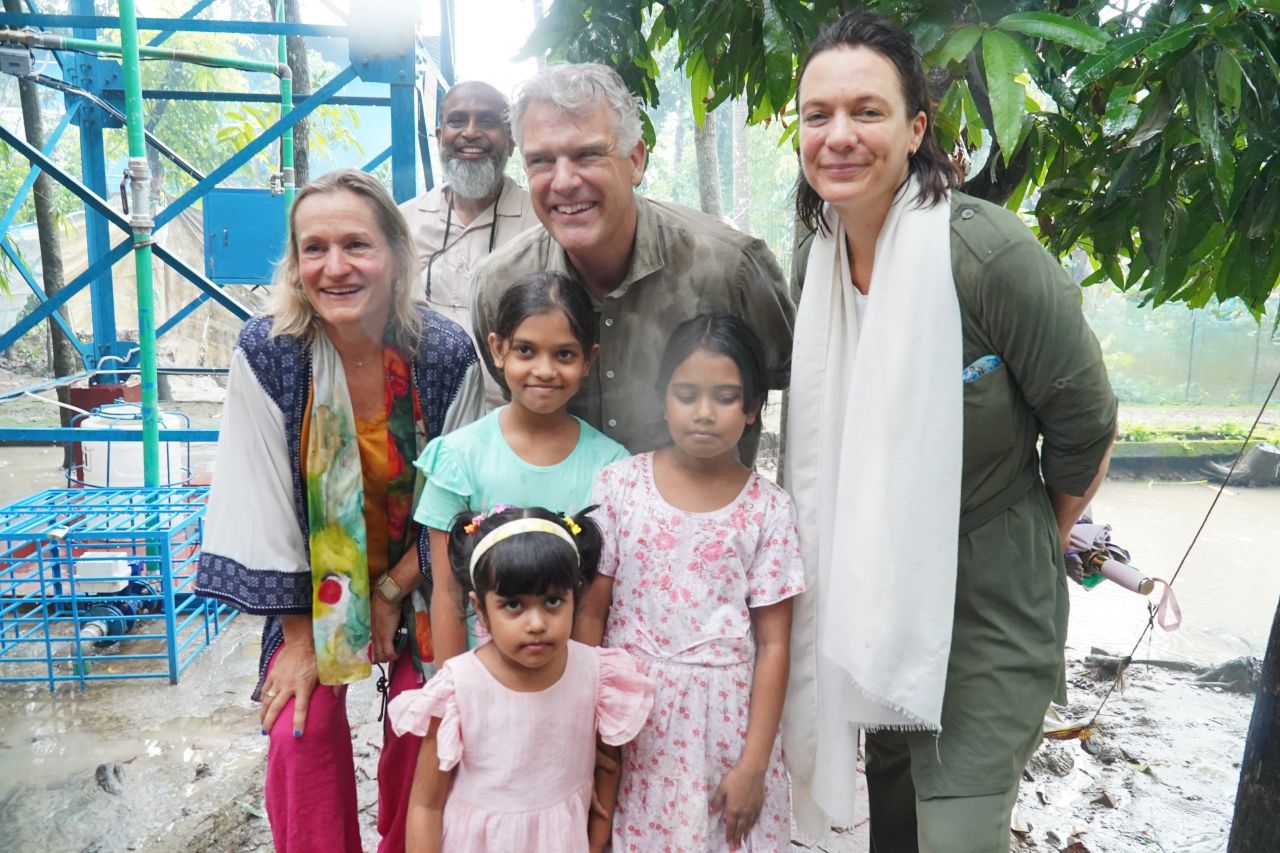
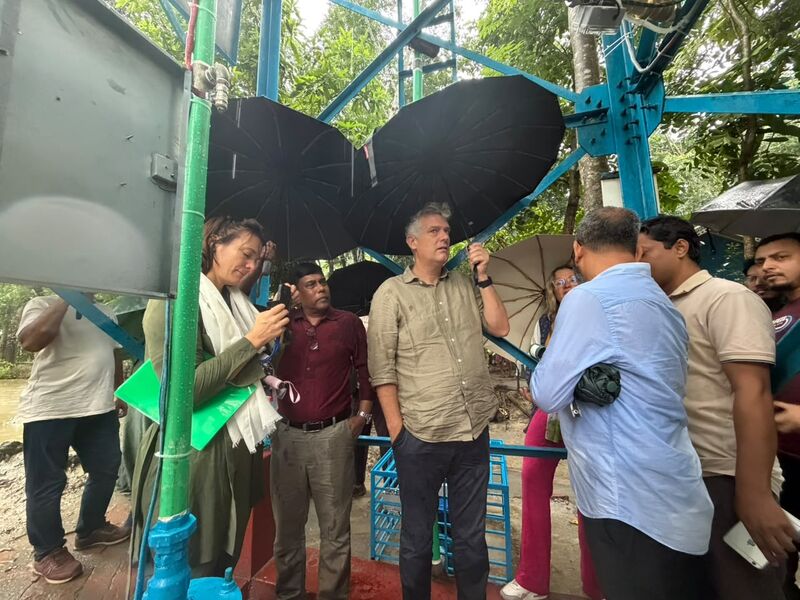
On 13 August 2026, Dutch Ambassador to Bangladesh Joris van Bommel visited an off-grid piped water facility at Dudholmou in Bakerganj, Barishal. The site is part of the Building Water Business programme, run by Max Foundation together with Max Social Enterprise and Max TapWater.
He was joined by Inge Klaassen, First Secretary for Water and Climate at the Netherlands Embassy in Dhaka, alongside Max Foundation Founder and Co-Director Joke Le Poole, Country Director for Bangladesh and Nepal Dr ATM Tariqul Islam, Senior Financial Advisor Aminul Islam, and Max Social Enterprise Managing Director Yameen Farook.
Joke Le Poole in conversation with the Ambassador
During the visit, Joke Le Poole, Founder and Co-Director of Max Foundation, spoke with Ambassador van Bommel about water management, household access and what it takes to make a water service financially sustainable.
A partnership that has to keep earning its place
Around 100 water grids now operate across Barishal and Patuakhali. They run as businesses rather than as donation-dependent services: households pay a monthly fee for the water they use, and that revenue covers operations. Solar power, digital payment systems and automation are being introduced to bring operating costs down further.
The design matters because it determines what happens when external funding reduces. Smart, low-maintenance piped systems keep maintenance demands low. Digital payments make revenue collection transparent. Together they make it possible to solve the “last mile” of connectivity — water at the household tap — and to keep solving it.
“We can make a difference if we work together with companies and with communities.”
Joris van Bommel, Ambassador of the Kingdom of the Netherlands to Bangladesh
Two decades in Barishal
Joke Le Poole described how Max Foundation began working more than two decades ago, focusing on water, sanitation and hygiene as a way of preventing child deaths. The work started in Barishal with water wells — many of which are still functioning 15 to 20 years on. As household economic capacity grew, families began looking for better access, and were willing to pay for piped water at home.
Dr ATM Tariqul Islam set out how that shift became a business-based model for piped drinking water in Barishal and Patuakhali. He pointed to reductions in skin and stomach illnesses, shorter distances for women and girls collecting water, and improved access to household bathrooms and wash facilities.
The Netherlands and Bangladesh are both delta countries, shaped by rivers and the sea — a shared starting point the Ambassador returned to during the visit. What Barishal shows is that the cooperation can reach all the way to the household tap, with government, private sector and communities each carrying part of the model.
National media coverage
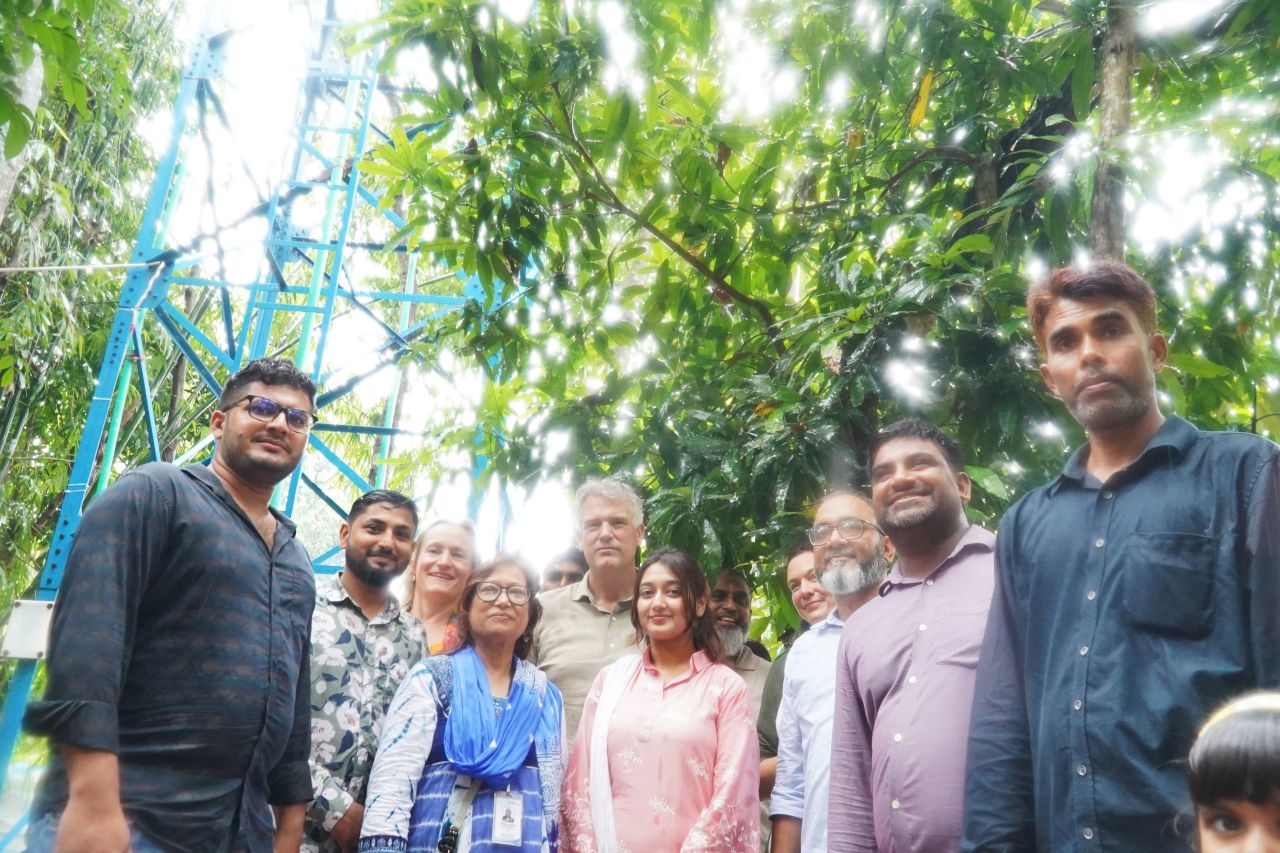
The visit was reported across Bangladeshi national media, with the public-private partnership model at the centre of the coverage.
See some of the local articles that covered the visit
With thanks to Ambassador Joris van Bommel and Inge Klaassen for taking the time to see this work up close, and to Dr ATM Tariqul Islam, Yameen Farook and the Max Social Enterprise team in Bangladesh for hosting and organising the visit.