Healthy Village Nepal
Max Foundation is running a 4-year health programme in rural Nepal, targeting 19,200 people across 5,400 households. It aims to reduce child stunting from 35% to 25% by 2029 through nutrition, WASH, and community-led health initiatives.
In Jwalamukhi Rural Municipality, Dhading District, one in three children under five is stunted (being too small for your age). Forty percent of the population relies on unsafe water sources. Half lack basic sanitation. These are not abstract statistics — they reflect the daily reality of families in a remote, hilly municipality where health services are fragmented, markets for essential products are thin, and the distance to a functioning health post can mean hours of travel.
With the support of Warm Nest Foundation and AFAS Foundation, we are implementing Max Swastha Palika (“Healthy Village” in Nepali) a four-year programme running through 2029, in close partnership with Jwalamukhi Rural Municipality and implemented by FOCUS Nepal. The programme will reach approximately 19,200 people across 5,400 households in all seven wards of Jwalamukhi.
A proven model, adapted for Nepal
Max Swastha Palika adapts the Healthy Village model that Max Foundation developed in Bangladesh and Ethiopia, where child stunting was halved in three years. The approach integrates WASH, nutrition, and maternal and adolescent health, mobilising communities through participatory child growth monitoring and behaviour change. Local entrepreneurs — including women entrepreneurs working at ward level — are trained to supply essential health and nutrition products, creating market-based services that continue independently of programme funding.
The goal by 2029 is to reduce stunting in Jwalamukhi from 35% to 25%, with 68 of the municipality’s 97 community units officially declared Swastha Palika — Healthy Village — based on sustained improvements in hygiene, nutrition, and health behaviours. Jwalamukhi Rural Municipality leads the certification process, integrating it into local government planning and budgeting from the start.
Learning from Bangladesh before implementation begins
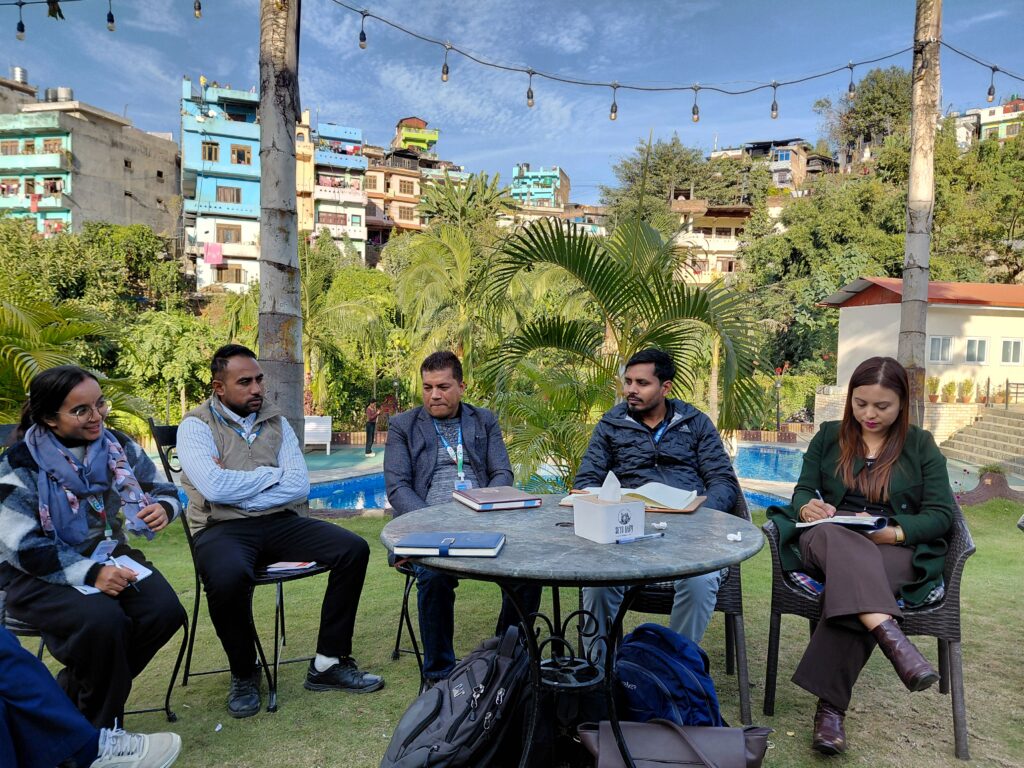
Before community-level implementation got underway, representatives from Jwalamukhi Rural Municipality and the programme team travelled to Bangladesh for a hands-on visit to the Healthy Village programme. They saw community mobilisation in action, observed how local governments lead the declaration process, and learned how market-based approaches to WASH, nutrition, and women-led enterprise operate on the ground. That learning is now feeding directly into how the model is being adapted for Jwalamukhi.
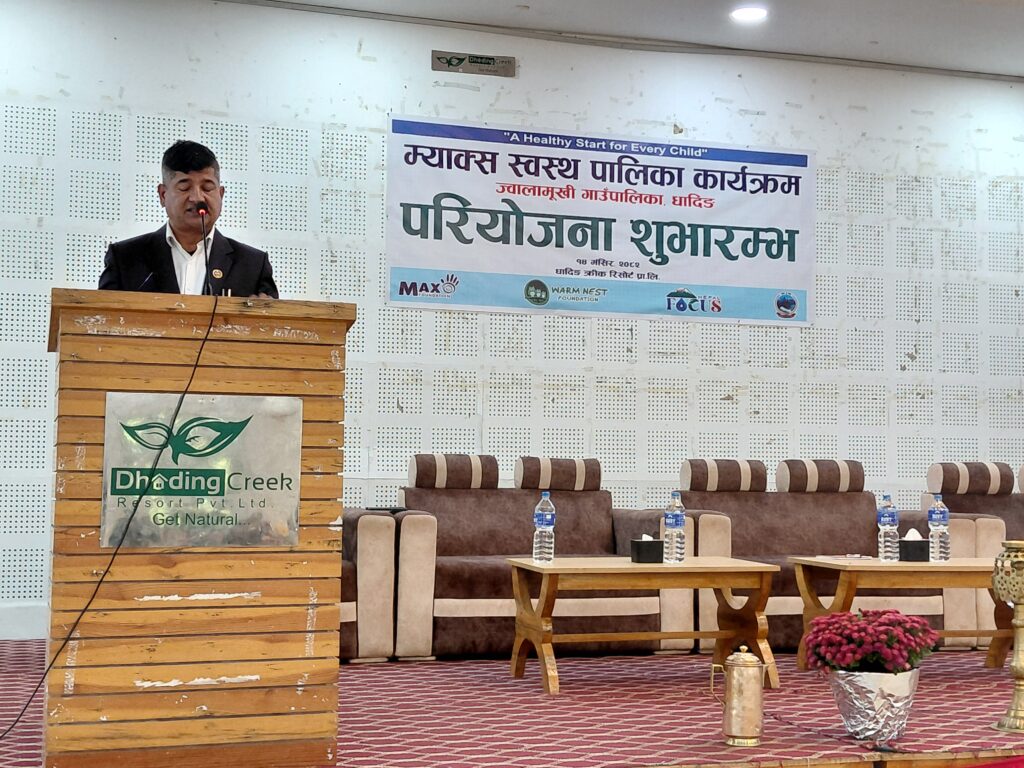
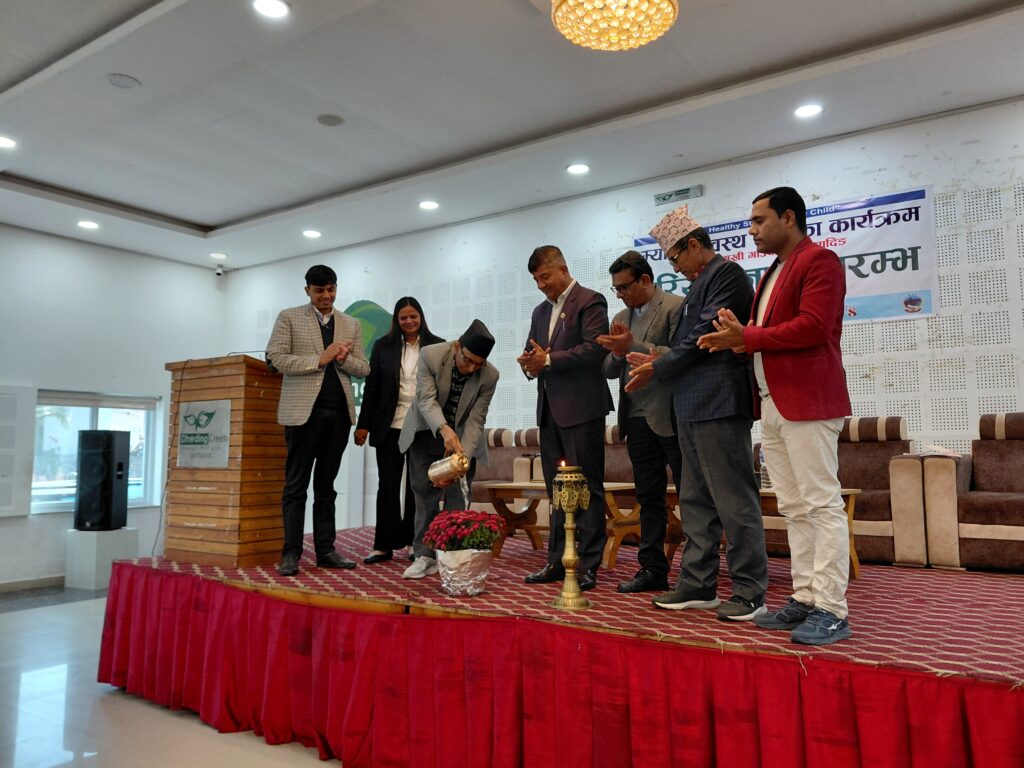
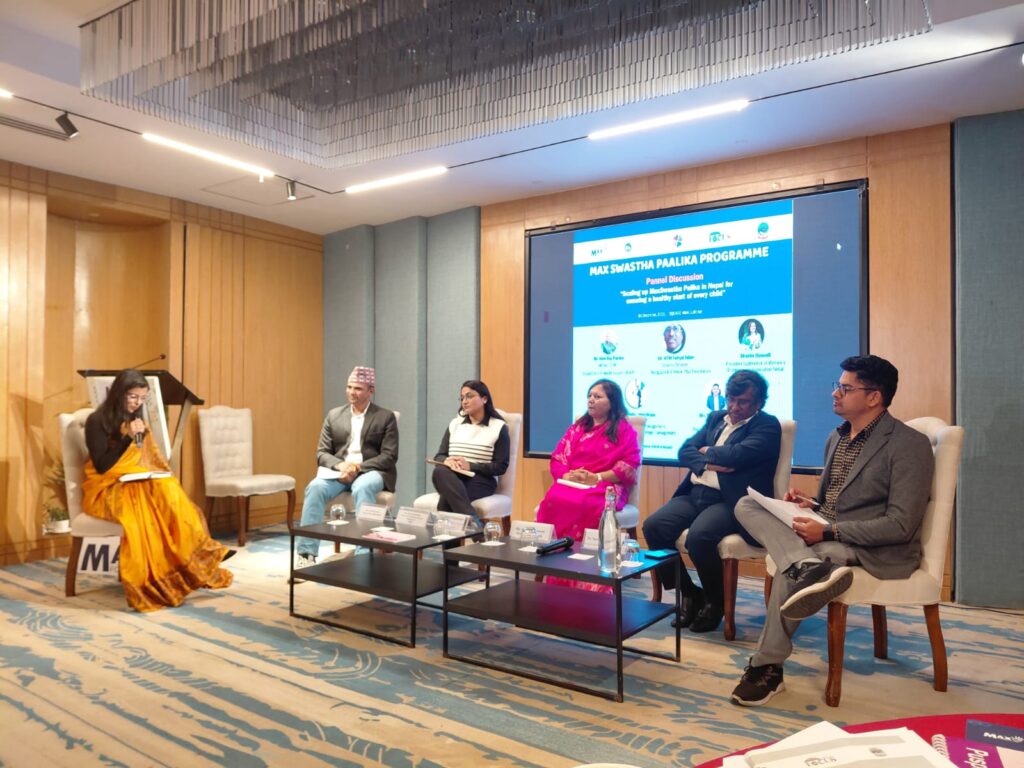
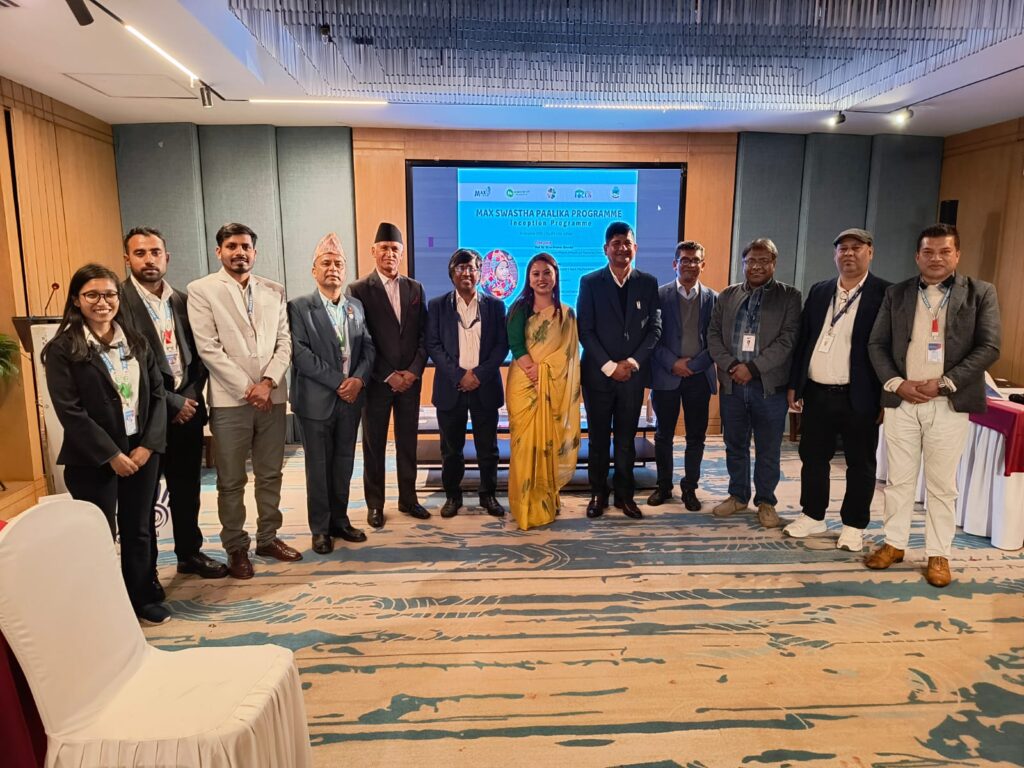
Inception workshops at municipal and national level brought together government officials, health authorities, civil society, and private sector actors to align the programme with Nepal’s national priorities. The national workshop in Kathmandu drew participants from federal and provincial ministries and generated strong interest in the model as a basis for future scale-up. Both events attracted media coverage: Hamro Najar, a leading regional online news portal, covered the municipal workshop, and WASH Khabar, Nepal’s only specialised digital magazine for water, sanitation, and hygiene, covered the national event.
What comes next
A baseline survey covering 864 households across all seven wards has been completed, establishing the starting point for child health, nutrition, and WASH indicators. With that evidence base in place, 2026 is the year Max Swastha Palika moves from foundations to full community-level action — growth monitoring sessions, entrepreneur training, community ignition, and the first steps toward Healthy Village declarations. We will be sharing more from the field as the programme gets underway.