Right2Grow: Local Leadership and Systems Change
As Right2Grow begins wrapping up five years of work, the programme's legacy of community-driven change is just beginning.
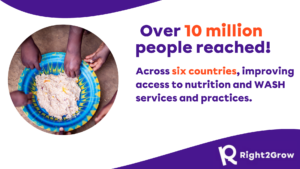
This Strategic Partnership—funded by the Dutch Ministry of Foreign Affairs and led by The Hunger Project, Save the Children, Action Against Hunger, World Vision, CEGAA, and Max Foundation—strengthened locally led systems for child nutrition and water, sanitation, and hygiene (WASH) across Bangladesh, Burkina Faso, Ethiopia, Mali, South Sudan, and Uganda.
Max Foundation served as the consortium lead in Bangladesh, where we worked alongside local partners to strengthen systems for budget accountability, entrepreneurship, and community-led advocacy.
From 2021 to 2025, Right2Grow reached over 10 million people, but numbers tell only part of the story.
What Stays in the System
Right2Grow was designed with one question: what remains when the programme ends?
The answer: strengthened systems, embedded capacity, and empowered communities driving their own change.
Communities moved from awareness to action. Women’s groups and youth networks became advocates, monitors, and educators. Local accountability groups led hundreds of improvements, such as fixing water points, restoring hygiene committees, and influencing government budgets.
In Bangladesh, Max Foundation introduced budget monitoring tools that enabled communities to track public spending on nutrition and water services. Union Parishads (local government councils) now hold annual public hearings where citizens question budget allocations. The Bangladesh National Nutrition Council also adopted Max Foundation’s Child Profile Estimation and Costing Model, which helps local governments estimate how many children need services and what it will cost to reach them, which strengthens evidence-based planning across the country.
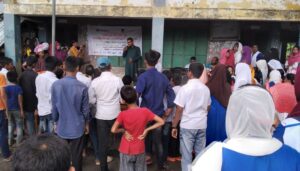 Community members gather in rural Bangladesh to discuss local budget priorities.
Civil society organisations grew stronger. Forty-seven organisations developed advocacy plans, adopted participatory budget monitoring tools, and mentored over 1,000 community groups. Their work contributed to major policy wins: Uganda approved its Food and Nutrition Bill, Ethiopia embedded nutrition into its humanitarian response approach, Mali ensured all 24 target municipalities integrated nutrition, water, and food security into local plans.
Entrepreneurs became delivery agents. Right2Grow connected 142 private sector actors with community markets, training local businesses to produce affordable water, sanitation, and nutrition products. In Bangladesh alone, 201 entrepreneurs—122 of them women—now deliver sustainable health solutions, from soap production to sanitary pads to fortified foods. Max Foundation helped connect entrepreneur associations with national companies to secure better wholesale pricing, creating pathways for these businesses to scale.
Celebrating the Journey and Looking Forward
As the programme winds down, partners are capturing lessons and building roadmaps for what comes next.
In Bangladesh, Max Foundation hosted the Right2Grow National Closing Ceremony in November, 2025, bringing together government officials, development partners, civil society, and community champions. The event celebrated achievements in integrating water, sanitation, and nutrition, while recognising Union Parishad leaders, civil society organisations, and community champions whose leadership will ensure gains continue beyond the programme.
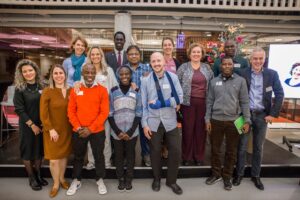
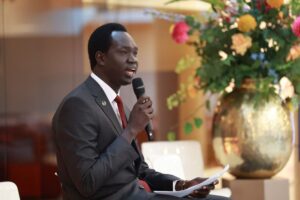
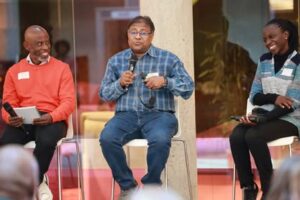
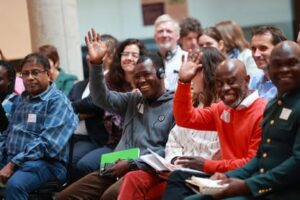
Shortly afterwards, partners, community leaders, and practitioners from all six countries gathered in The Hague for Beyond Right2Grow: Lessons, Legacy & Local Leadership. The event celebrated advocacy wins, explored what creates lasting change, and co-created commitments to carry Right2Grow’s spirit forward.
View below some photos from the event
A Knowledge Legacy
Country teams produced over 50 learning briefs translating experience into practical insights, which are all publicly available so others can learn from what worked.
Max Foundation developed and shared tools now being used by governments, including a budget monitoring approach that helps communities track public spending on nutrition and water services, and a research model that pairs local researchers with community leaders to ensure evidence reflects lived realities. In Bangladesh, we convened over 100 stakeholders, like entrepreneurs, banks and policymakers, to explore how to build enabling ecosystems for rural entrepreneurs delivering health solutions.
What Comes Next
Max Foundation’s role in Right2Grow reinforced what we’ve always believed: real impact is measured by what stays in the system after programmes end.
As Right2Grow wraps up, we continue applying these lessons from Bangladesh to our work in Ethiopia, where our Healthy Village approach strengthens government systems for nutrition and water integration through the Seqota Declaration. We’re also expanding our support for water entrepreneurship and budget accountability approaches tested through Right2Grow.
Thank you to every partner, community leader, government colleague, and champion who made Right2Grow possible.
Learn more: Right2Grow website