Disability Inclusion: When the system sees you
How embedding disability-inclusive practice into existing child health systems — rather than running parallel programmes — creates services that reach more children and last beyond project funding
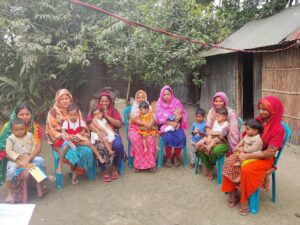 Community Support Group for children with Disabilities, in Bangladesh
In Lalmonirhat district, Bangladesh, 570 children with disabilities have been identified and connected to health services through our Healthy Village Urban programme. Before the programme began, just 17 of them held a Suborno Card — Bangladesh’s official disability identity card, which unlocks access to monthly allowances, priority healthcare, and education support. These children were not newly disabled. They were always there. What changed was that the community health system around them had learned to see them.
That shift did not happen through a dedicated disability programme running alongside our work. It happened because we made disability-inclusive practice a part of everything we were already doing.
The problem with parallel programmes
Dedicated disability programmes face a recurring problem. When their funding ends, so do their services. The children they reached do not suddenly become visible to the mainstream health system — they fall back through the gap. We have seen this pattern across the sector, and it is what we set out to avoid in Lalmonirhat.
The question we kept asking was not “how do we add disability services?” but “how do we make the systems we are already strengthening work for every child?” The answer shaped how the entire programme was designed.
What disability-inclusive programming looks like in practice
In Healthy Village Urban, disability-inclusive practice meant that the same community health workers doing routine nutrition outreach were also trained to identify early signs of disability during household visits. The same courtyard sessions where caregivers learned about hygiene and child growth became the spaces where disability screening tools were introduced and stigma could be addressed in open conversation. The same local entrepreneurs learning to provide Water, Sanitation & Hygiene (WASH) products were trained in accessible design — adapted latrines, grab bars, low-height handwashing stations — as a standard, not an add-on.
Birth registration turned out to be one of the most critical entry points. In Bangladesh, children need to be registered to access disability benefits — but many parents in our working area lacked their own registration documents, which are required before their children can be registered. Through advocacy and joint campaigns with Union and Municipality authorities, 4,847 children entered the registration system in the most recent programme year. This kind of systemic barrier is invisible unless you are already working closely with local government — which is exactly why disability inclusion needs to sit inside existing programme structures, not outside them.
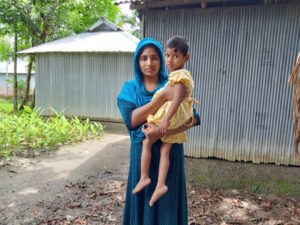
Rumana with her daughter Rubaiya (6 years)
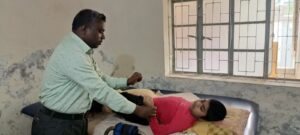
Therapy in Disability Support Centre
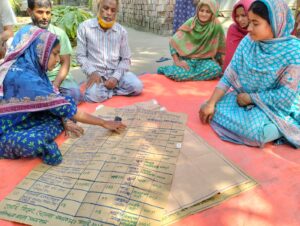
Community Support Group
What integration does not automatically solve
We have also been honest about the limits of this approach. Social stigma around disability ran deep in the communities where we work, and it delayed care for families even after services were available and reachable. Home visits and personal invitations to community sessions were often what moved hesitant caregivers to engage. Attitude change moves more slowly than system change.
The financial costs of disability care — transport to therapy, WASH improvements, clinical treatment — put real strain on households with limited income. A well-designed programme does not make those costs disappear. These are challenges the programme continues to work on, and they are worth naming clearly.
Structures that continue after the programme ends
Across 189 communities, all Community Support Groups now include disability prevention and inclusion as a standing part of their work. Mobile therapy vans, coordinated through Disability Services and Support Centres in Lalmonirhat, reached 94 children in the last programme year. Local government has embedded disability in its planning processes. These are structures that will continue meeting, planning, and serving communities after external programme support reduces.
The 570 children identified in Lalmonirhat are now linked to services — not dependent on a programme continuing to exist. That is the difference between disability-inclusive programming and a disability add-on. And it is the direction we believe the sector needs to move in: not building parallel structures for the children the mainstream misses, but changing the mainstream so it stops missing them.
The Healthy Village Urban programme in Lalmonirhat, Bangladesh is co-funded by Ineke Feitz Stichting and Grand Challenges Canada, and implemented in partnership with ESDO.