Pilot · Bangladesh · Lalmonirhat river islands

Smart Mobile Child Clinics is a pilot bringing maternal and child healthcare to families on Bangladesh’s shifting river islands, delivered by women entrepreneurs and subscription telemedicine, and designed to keep running after the pilot ends.

The challenge
When the nearest doctoris across the river

On the chars, the shifting islands of silt in Bangladesh’s northern rivers, seasonal floods cut communities off from the formal health system for weeks at a time. Health facilities exist, but the last-mile infrastructure to reach them does not.

On Folimarir and Kharua chars in Lalmonirhat, families face long journeys and prohibitive transport and treatment costs to reach care. The single community clinic lacks basic diagnostic tools, and the district’s doctor-to-population ratio sits far below the level the World Health Organization considers adequate. For a mother with a sick infant, distance itself becomes the barrier.

1:36,000
doctor-to-population ratio
far below WHO norms
~2,000
people live on the two chars
Folimarir and Kharua
182
children under five on the islands
the pilot’s focus

Figures from the programme assessment.

How the programme works
Building a market,not just a service

Rather than delivering care with external staff, the pilot builds the market and community structures that can sustain access on their own. Women entrepreneurs own and operate the mobile clinics; families subscribe monthly; and qualified doctors are reached remotely. It is Max Foundation’s systems-strengthening approach applied to one of the hardest places to reach.

Women entrepreneurs run the clinics
Local women, not outside staff, own and operate the mobile clinics, providing growth monitoring, basic diagnostics and subscription enrolment. Communities respond more openly when women lead health conversations, which strengthens trust and lasting behaviour change.
Telemedicine to a real doctor
Through a partnership with Square Health Limited’s telemedicine platform, entrepreneurs connect families to qualified doctors remotely, with digital health records that keep care continuous between visits.
Affordable monthly subscriptions
Needs assessments showed families strongly prefer predictable monthly fees over unpredictable pay-per-visit costs. Subscriptions make care affordable for households and give entrepreneurs a steady income, the reason the model can continue without external funding.
Linked to the public system
Standard operating procedures align with national health standards, local government joined the inception workshops, and referral partnerships connect entrepreneurs to health facilities, so the pilot tests a genuine pathway into Bangladesh’s health infrastructure.
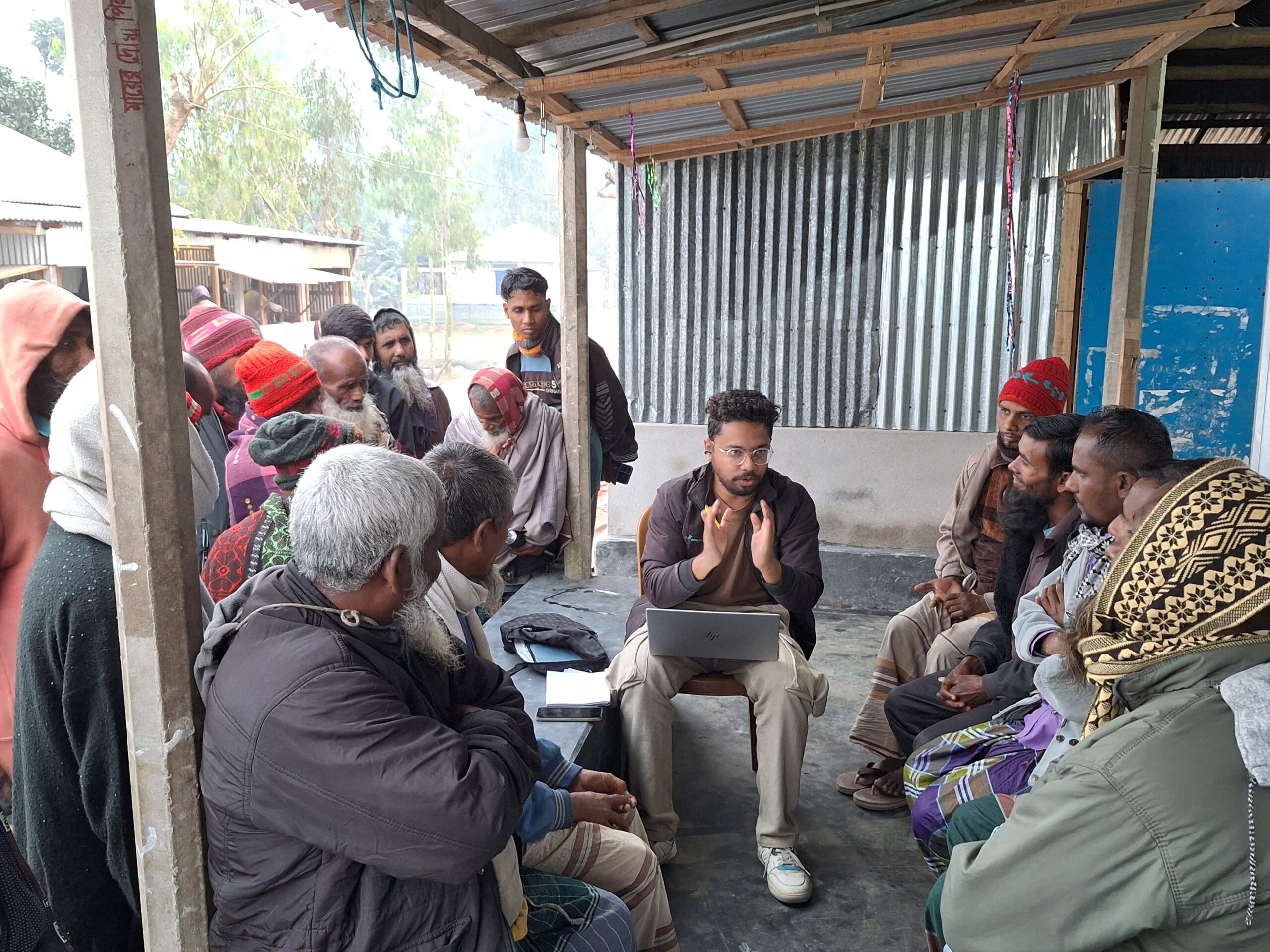
Stakeholder orientation workshop for the Smart Mobile Child Clinics pilot.
Stakeholder orientation workshop, 2026.

Preparatory phase · 2025
Putting the piecesin place

The preparatory phase established the partnerships, protocols and evidence the model needs before operations begin in 2026. These figures describe what the pilot has built to test whether entrepreneurship, digital health and subscription financing can reach isolated communities at a cost that markets and government can sustain.

365
households in the needs assessment
which shaped the model
2
river islands in the pilot
Lalmonirhat district
Women-led
clinics owned and run locally
by women entrepreneurs
2026
clinic operations begin
the next step on the chars

Evidence informs the design
Designed around whatfamilies will sustain

Comprehensive needs assessments across 365 households drove the pilot’s central design choice: monthly subscriptions rather than pay-per-visit fees. Families wanted nearby services at a predictable cost; entrepreneurs need predictable income. Building the model on that evidence is what gives it a chance of enduring after the pilot.

Partners and funding
Workingin partnership

The Smart Mobile Child Clinics pilot is run with the Eco-Social Development Organization (ESDO) and SK Foundation, with telemedicine delivered through Square Health Limited. It sits within Max Foundation’s wider Healthy Village work in Bangladesh.

Eco-Social Development Organization (ESDO)
SK Foundation
Square Health Limited

Keep exploring
More ofour work
Healthy Village Urban
Child health and WASH in Bangladesh’s dense urban settlements, including disability inclusion.

See the programme →

Healthy Village Nepal
A new Healthy Village programme taking root in Jwalamukhi Rural Municipality, Nepal.

See the programme →