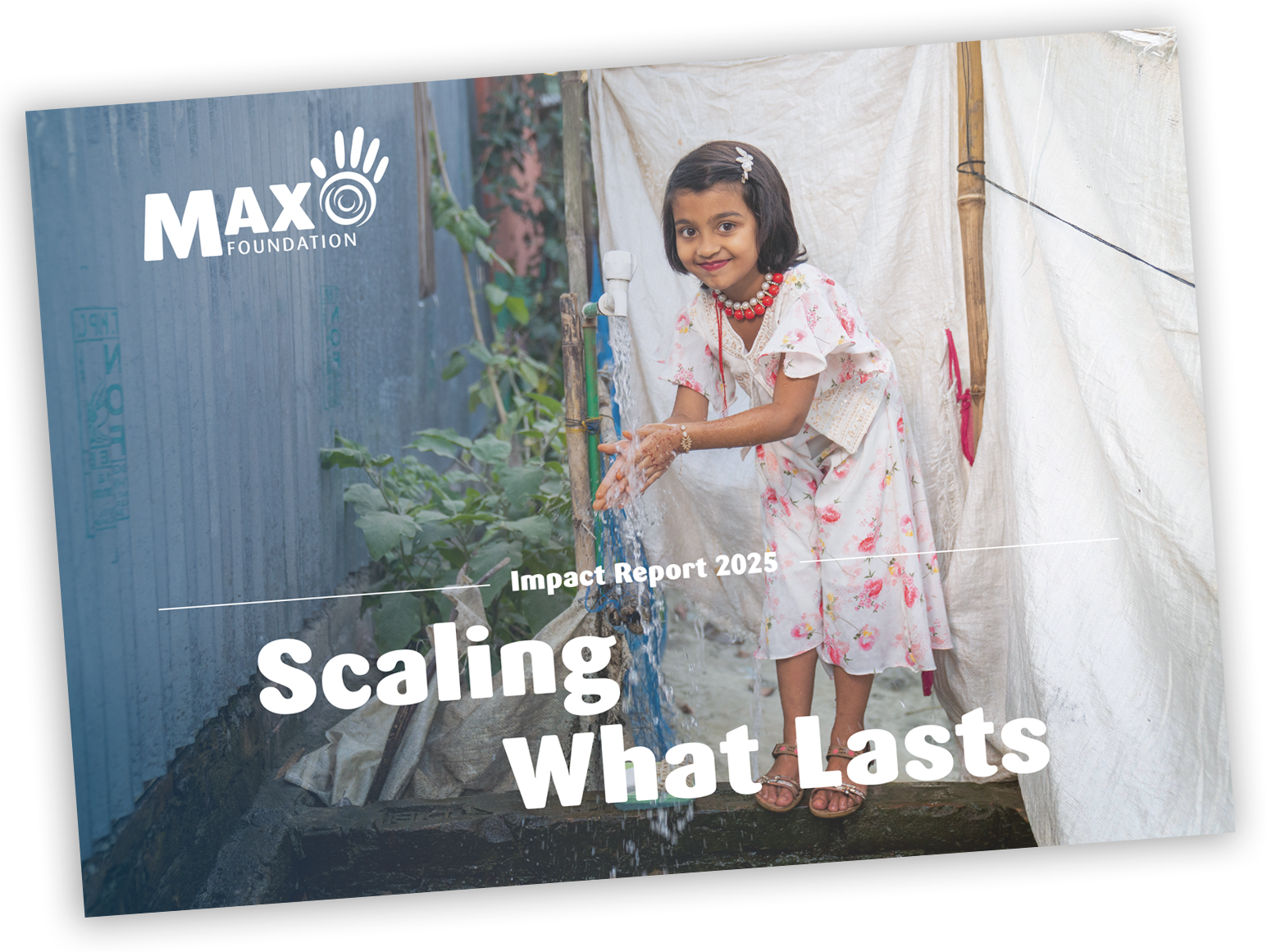
Max Foundation’s Impact Report 2025, Scaling What Lasts, looks at how our work in child health, nutrition, water and sanitation is taking root in government systems across Ethiopia, Bangladesh and Nepal. In a year of deep aid cuts, it asks what keeps working when external funding ends, and how proven approaches reach far beyond where they began.

Impact Report 2025

ScalingWhat Lasts

In one of the hardest years the development sector has faced, we asked one question of everything we do: not just does it work — but can it last, and can it reach far beyond where it began?

Read the full report

Max Foundation in 2025

A year that tested the strategy — and proved it.

2025 reshaped the world development organisations work in. The dismantling of USAID ended decades of United States leadership in international development, and the Netherlands and other major European donors cut deep into their aid budgets. In the countries where we work, that turbulence meant real instability — for governments, for civil society, and for the communities counting on continuity.

In a world where donor funding can no longer be assumed, impact cannot only be measured by what a programme delivers while it is funded. The more important question is what keeps working when external support ends — and how proven solutions reach far beyond the communities where they were first tested. That question runs through this year’s report, Scaling What Lasts.

2025 in numbers

Across our programmes in Bangladesh, Ethiopia and Nepal

1.3 million
people reached through our programmes
100,000
children under five regularly measured for growth
840
entrepreneurs involved in our programmes
30,000
people gained access to improved water
200,000
people gained access to improved sanitation
€2.9 million
invested by households themselves in water, sanitation and hygiene

What changed in 2025was who carries the work.

Ethiopia

From a programme to government policy

Our programmeNational framework

Working with the Federal Ministry of Health and the Seqota Declaration team, the Healthy Village approach and the government’s Malnutrition-Free Village concept became one unified framework — the Malnutrition-Free Healthy Village. The Ministry adopted it as the village-level unit for ending child stunting by 2030, designed to scale to 125 million people across 1,050 woredas.
Bangladesh

When community tools become national tools

Built by civil societyAdopted by the state

The National Nutrition Council formally recognised two tools co-developed through Right2Grow — one tracking how local governments spend public money on nutrition and water, the other costing what children need. Across 40 Union Parishads, allocations for child nutrition and clean water grew from 1.45% in 2021 to 18% by the end of 2025.

Bangladesh · Max TapWater

Water that can keep growing

Grant-funded pipesA water business that scales

Our social water enterprise, Max TapWater, added 41 piped water grids, reaching 98 grids and 22,000 people with safely managed water. Each connection saves women and girls one to one-and-a-half hours a day. With smart-grid technology and Public–Private Partnership pathways in preparation, the focus is making safe water financially sustainable as it grows.

Nepal

Owned from day one

Handed over at the endLed from the start

Healthy Village launched in Jwalamukhi Rural Municipality, Dhading District — the third country to adapt an approach proven in Bangladesh and Ethiopia. From the outset the municipality leads: it owns the certification process and embeds it in local planning and budgeting. Scale begins when local ownership is built into the design.

How we work

Four approaches behind every resultall built to outlast the funding.

Integrating for Impact

Child health is never a single-sector problem, so we never treat it as one. Water, nutrition and maternal health move together in one community process.

400+ learners from 52 countries took our free online WASH–nutrition course, built with IRC’s WASH Systems Academy. In Lalmonirhat, 570 children with disabilities were identified through routine screening.

Market Systems

We back entrepreneurs and markets as part of the solution, building demand and supply for healthy products side by side.

70 entrepreneurs in Bangladesh reached formal finance, almost three times the year’s target, and customers per entrepreneur rose 68%. The ecosystem still limits them, so an Entrepreneurship Lab is in design.

Strengthening Systems

Impact is what keeps working after our support ends, so we work through government systems rather than around them.

200 new Healthy Villages were declared by local governments in 2025. Communities also formed 36 new savings associations, with 1,073 members pooling their own money for water and nutrition.

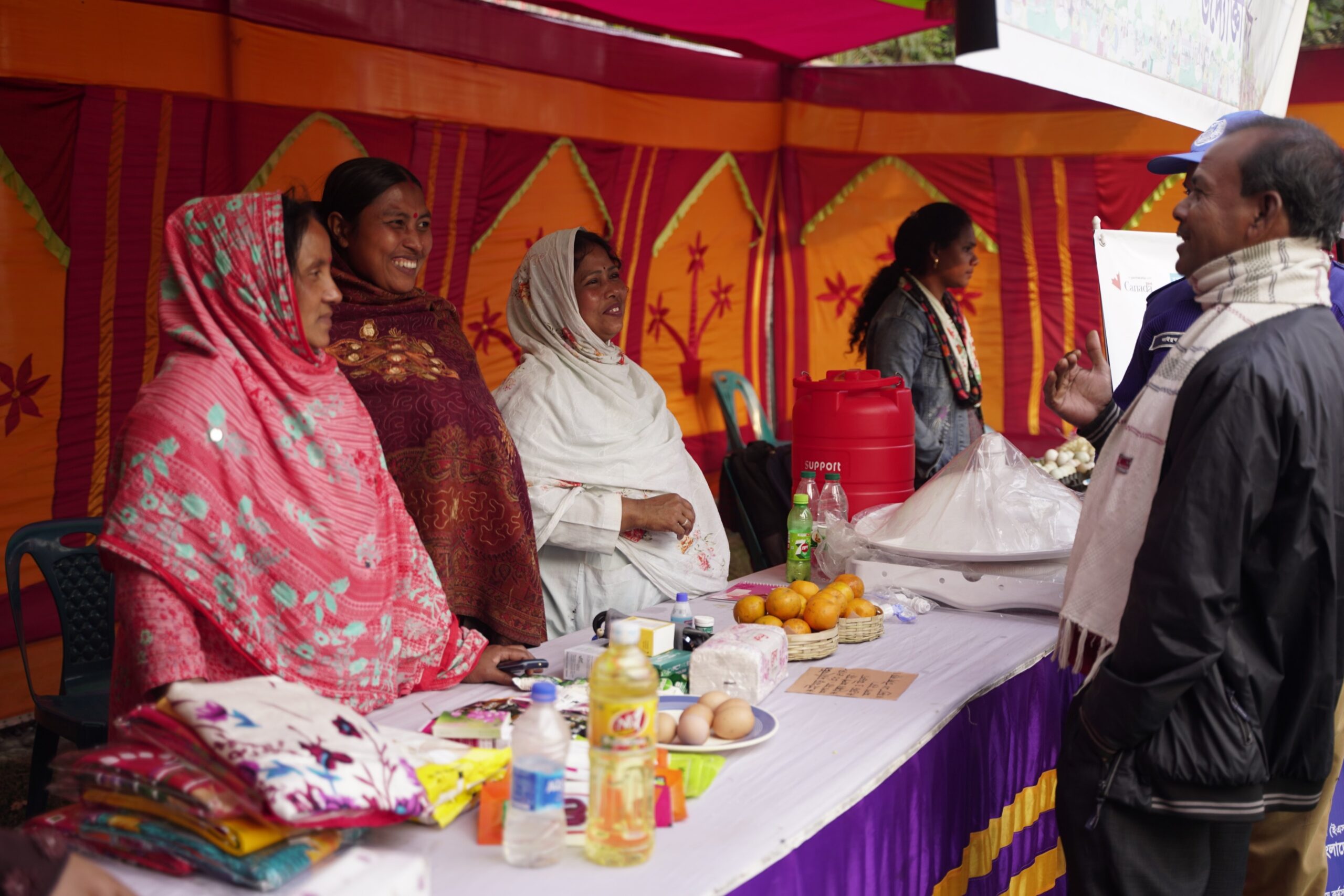
Lata Debi showcasing health and nutrition products alongside other entrepreneurs during a community campaign in Lalmonirhat, Bangladesh
Lata Debi (in white) showcasing nutrition and health products during a community campaign

I started my business with just BDT 3,000 taka (€21). I sold sanitary napkins, diapers, biscuits, soap, shampoo, and mothers’ supplements.

Lata Debi — Health Promotion Agent, Lalmonirhat, Bangladesh. One of 63 women who built a market where none existed. Her store now stocks more than 50 products and earns 15,000–18,000 taka (€105–€126) a month.

In the spotlight: Right2Grow

Five years, six countries — and a legacy that outlasts the funding

Right2Grow closed in 2025: a consortium programme strengthening community-led advocacy on child nutrition and water across Bangladesh, Burkina Faso, Ethiopia, Mali, South Sudan and Uganda. Max Foundation was active in Ethiopia and consortium lead in Bangladesh.

~1 million
people directly reached across six countries
€6.9 billion
in public allocations tracked through community advocacy
66
policies, strategies and reforms influenced
2 tools
now recognised for national use in Bangladesh

This is the short version.Read the whole story.

The families, entrepreneurs, government partners and colleagues scaling what lasts are all in the full Impact Report 2025.

Impact Report 2025 — Scaling What Lasts

Read the full report